
Keynote Speaker 1
|
|---|
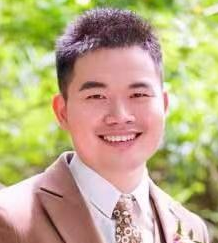 |
| Prof. Nianyin Zeng, Xiamen University, China |
Nianyin Zeng is currently a Professor with the Department of Instrumental and Electrical Engineering of Xiamen University. He received the B.Eng. degree in electrical engineering and automation in 2008 and the Ph.D. degree in electrical engineering in 2013, both from Fuzhou University. From October 2012 to March 2013, he was a RA in the Department of Electrical and Electronic Engineering, the University of Hong Kong. From September 2017 to August 2018, he was an ISEF Fellow founded by the Korea Foundation for Advance Studies and also a Visiting Professor at the Korea Advanced Institute of Science and Technology (KAIST). His current research interests include intelligent data analysis, machine learning and computer vision, computational intelligent, system modeling and applications. He has published more than 80 research papers in referred journal and conferences as well as 13 patents. By Google Scholar, his publications have been cited by more than 7,000 times with H-Index 34. Dr. Zeng is currently serving or has served as an Associate Editor for Neurocomputing Frontiers in Medical Technology, and Evolutionary Intelligence, an Editorial Board member for Computers in Biology and Medicine, Biomedical Engineering Online, Mathematical Problems in Engineering, Journal of Electronics & Information Technology, and Journal of Image and Graphics, and also Guest Editors for Frontiers in Neuroscience and Frontiers in Medical Technology. He has also served as program committee members for a number of premier international conferences related to intelligent data analysis, including EAI ICMTEL, ACAIT, ICCSE, etc. Dr. Zeng has received a number of prestigious awards, including High-Level Talent of Fujian Province, Key-Talent of Xiamen City, Nanqiang Young-Top-Talent of Xiamen University, three Provincial Natural Science Awards, Invention and Entrepreneurship Achievement Award by the China Invention Association, and Distinguished Reviewers of Computers in Biology and Medicine, Neurocomputing, and Chinese Journal of Scientific Instrument. |
Keynote Speaker 2
|
|---|
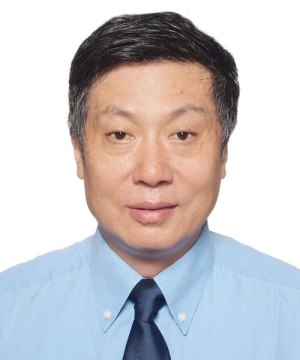 |
| Prof. Weijia Jia, Beijing Normal University, China |
Prof. Weijia Jia is currently a Chair Professor at Beijing Normal-Hong Kong Baptist University and a Professor at Beijing Normal University (BNU), Zhuhai, Guangdong, China. He also serves as the Director of Joint BNU-BNBU Institute of Artificial Intelligence and Future Networking. Prior joining BNU/BNBU, he served as the Chair Professor and Deputy Director of the State Kay Laboratory of Internet of Things for Smart City at the University of Macau and Zhiyuan Chair Professor at the Shanghai Jiaotong University, PR China. He received BSc/MSc from Center South University, China in 1982-1984 and PhD from Polytechnic Faculty of Mons (now with the University of Mons), Belgium in 1991-1993, respectively; all in computer science. For 1993-1995, he joined German National Research Center for Information Science (GMD) in Bonn (St. Augustine), Germany as a research fellow. From 1995-2013, he worked in City University of Hong Kong as an Assit./Assoc./full professor. His contributions have been recognized as the theory and algorithms of AI (NLP in particular) optimal network routing and deployment, intelligent edge computing, vertex cover, anycast and multicast protocols, sensors networking, and knowledge relation extractions. He has over 500 publications in the prestige international journals/conferences (e.g. IEEE/ACM Transactions/journals, Infocom, AAAI etc.) and research books and book chapters. His current H-index is 67 (Google scholar, citations 15000+). He received the 1st Prize of Scientific Research Awards from the Ministry of Education of China in 2017 and many provincial science and technology awards. He has guided the students to attain 30+ top prizes in various top international conferences and AI competitions. Based on his research outcome and input into the system implementations, he received the best product awards from the International Science & Tech. Expo (Shenzhen, China) in the consecutive years of 2011 and 2012. He has served as area editor for various prestige international journals (e.g. IEEE Transactions on Parallel and Distributed Computing and Computer Communications), chair and PC member/keynote speaker for top international conferences. He has been recognized as Chinese National Expert and listed in 2020-2022 as Top 2% of life Scientists on Stanford List. He is the Fellow of IEEE and the Distinguished Member of China Computer Federation (CCF). |
Keynote Speaker 3
|
|---|
 |
| Prof. Qiu Daowen, Sun Yat-Sen University, China |
My main research outcomes have been in the following areas. (1) Quantum models of computation. (2) Quantum query algorithms. (3) Quantum cryptograpy and quantum communication. (4) Quantum states distinguishablility and quantum states cloning. (5) Theory of computation based on quantum and lattice-valued logic. (5) The applications of fuzzy and probabilistic automata to discrete event systems, focusing on diagnosability and supervisory control. We have published over 130 papers in peer-review journals, and over 25 conferences papers. More specifically, (1) we have systematically studied a number of different QFA (quantum finite automata) models, and solved the decidability of equivalence and minimization of these QFA models (D. Qiu, L. Li, X. Zou, P. Mateus, J. Gruska, Acta Informatica, 2011, 48 (5-6): 271-290; P. Mateus, D. Qiu, L. Li, Information and Computation, 2012, 218: 36-53;L. Li, D. Qiu, Theoretical Computer Science, 2008, 403(1): 42-51). Therefore, we have answered the problems of how to decide the equivalence of quantum sequential machines proposed by Professor Gudder, and how to decide the equivalence of MM-1QFA proposed by Professor Gruska. In particular, we have answered the problems of how to minimize QFAs proposed by Moore and Crutchfield. We proposed a model of quantum-classical finite automata, named as one-way quantum finite automata together with classical states (D. Qiu, L. Li, P. Mateus, A. Sernadas, Journal of Computer and System Sciences, 2015, 81(2): 359-375). Also, we have studied some properties of 2QFAC, quantum pushdown automata, and quantum Turing machines. (2) We have proved the characterization of all Boolean functions that can be solved by quantum 1-query algorithm. (3) We have studied quantum states discrimination and quantum cloning machines, and we have derived some bounds on unambiguous discrimination and minimum-error discrimination (some bounds are optimal to a certain extent), and some relationships between unambiguous discrimination and minimum-error discrimination have been clarified. Also, we have established a generic machine model of probabilistic cloning and deleting, and proposed a universal probabilistic deleting machine. (4) We have studied quantum teleportation and superdence coding based on different entangled states (W-states). (5) We have studied semi-quantum cryptography and proved that a semi-quantum key distribution protocol is unconditional security. (6) We have discovered some essential connections between quantum logic and models of computation, and we have established residuated lattice-valued automata theory (D. Qiu, Information and Computation, 2004, 190(2): 179-195). (6) We have established a fundamental framework of the supervisory control for fuzzy discrete event systems (FDES) and developed the supervisory control of probabilistic discrete event systems (PDES), using fuzzy automta and probabilistic automata, respectively. |
Keynote Speaker 4
|
|---|
 |
| Prof. Haiquan Zhao, Southwest Jiaotong University, China |
Zhao Haiquan, Doctor of Engineering, professor, doctoral supervisor, senior member of IEEE and Chinese Institute of Electronics, academic and technical leader in Sichuan Province, outstanding expert with outstanding contributions in Sichuan Province, winner of Sichuan Outstanding Youth Fund and core member of Sichuan Youth Science and Technology Innovation Team, Won the First Prize of Natural Science of CAA of Chinese Society of Automation in 2019 (ranked 3rd), the second Prize of Natural Science of CAA of Chinese Society of Automation in 2018 (ranked 1st), the second Prize of Science and Technology Progress of the Ministry of Education (ranked 3rd), and the 12th Jeme Tianyou Railway Science and Technology Award - Youth Award. The 9th Jeme Tianyou Science and Technology Award of Ministry of Railways - Jeme Tianyou Special Award of Southwest Jiaotong University, Tang Lixin Outstanding Scholar Award; Executive Director of Provincial Science and Youth Federation, member of Sichuan Youth Federation, Executive director of Chengdu Knowledge Association. Serves on the editorial board of international journals such as Signal Processing. |